
Panels nodes generate repeating patterns and tessellations, including quad, triangle, diamond, and hexagonal layouts.
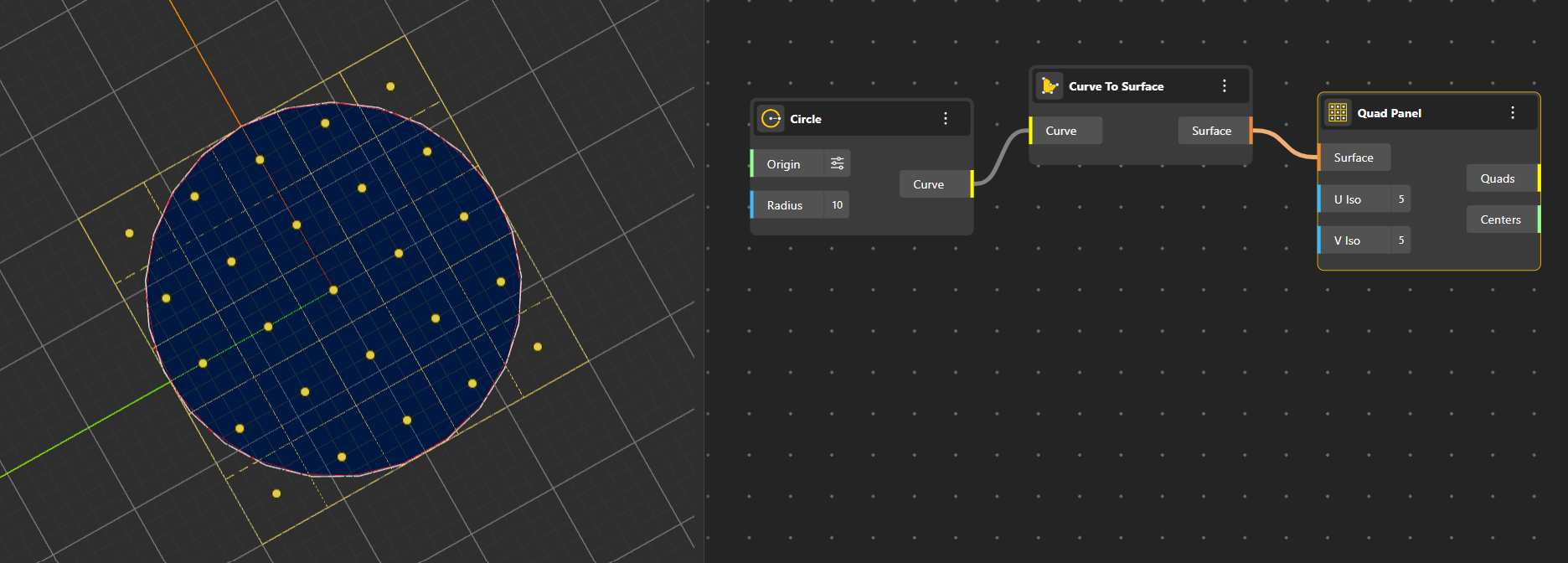
Quad Panel: Generates a paneling pattern made of four-sided (quadrilateral) panels. Useful for façade systems, grids, and evenly divided surfaces.
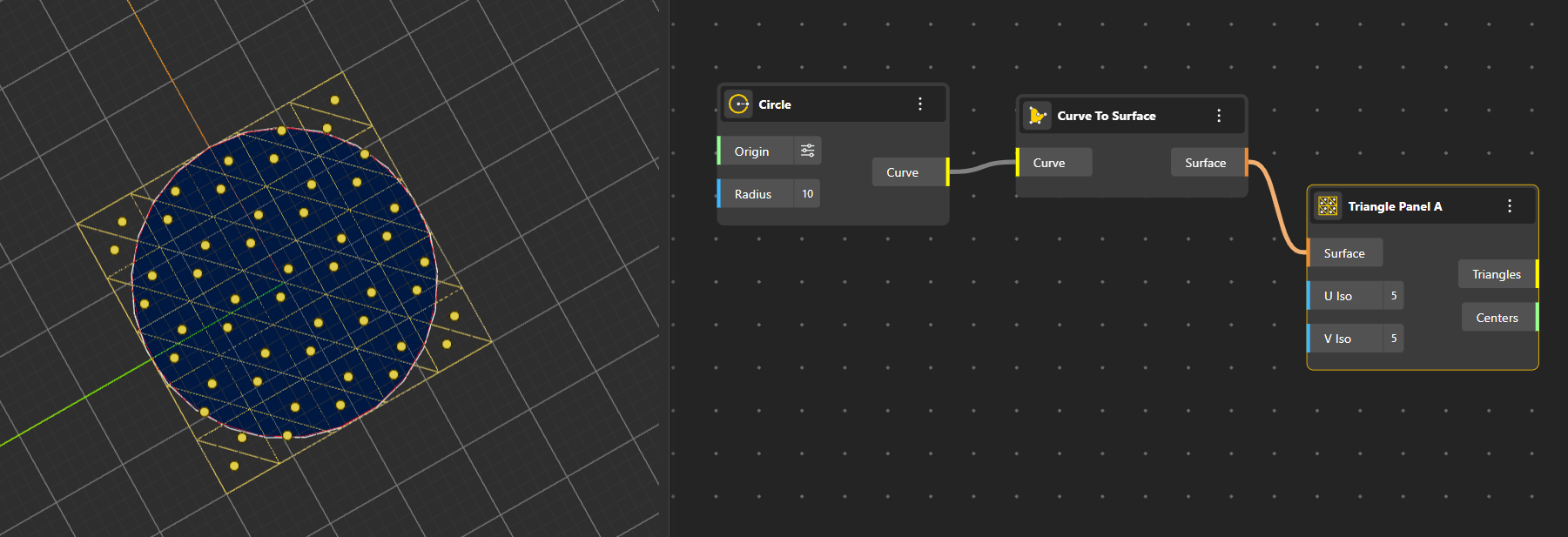
Triangle Panel A: Creates a triangular panel layout using one type of triangle subdivision. Ideal for lightweight structures, tessellations, or geometric patterns.
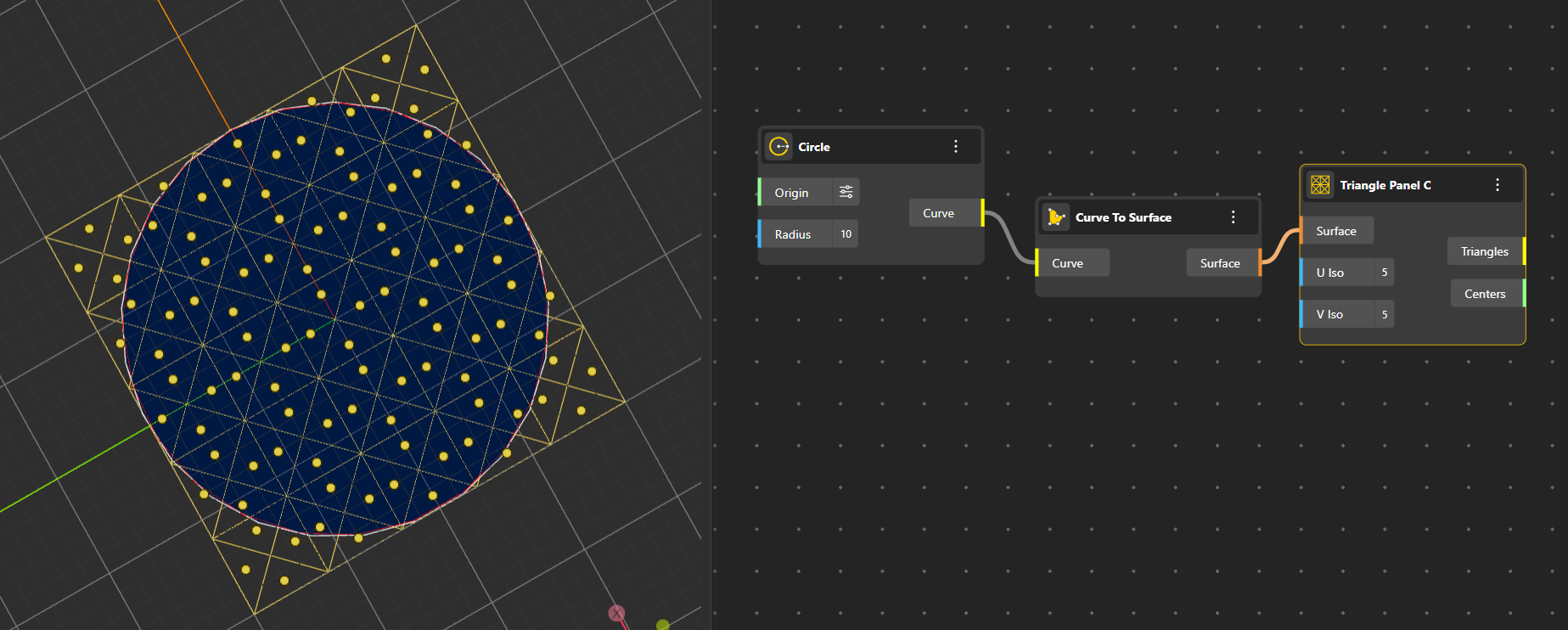
Triangle Panel C: Produces a triangular panel pattern with an alternative subdivision method (different orientation/connection logic from Triangle Panel A). Useful when you need variation in triangle layout or panel direction.
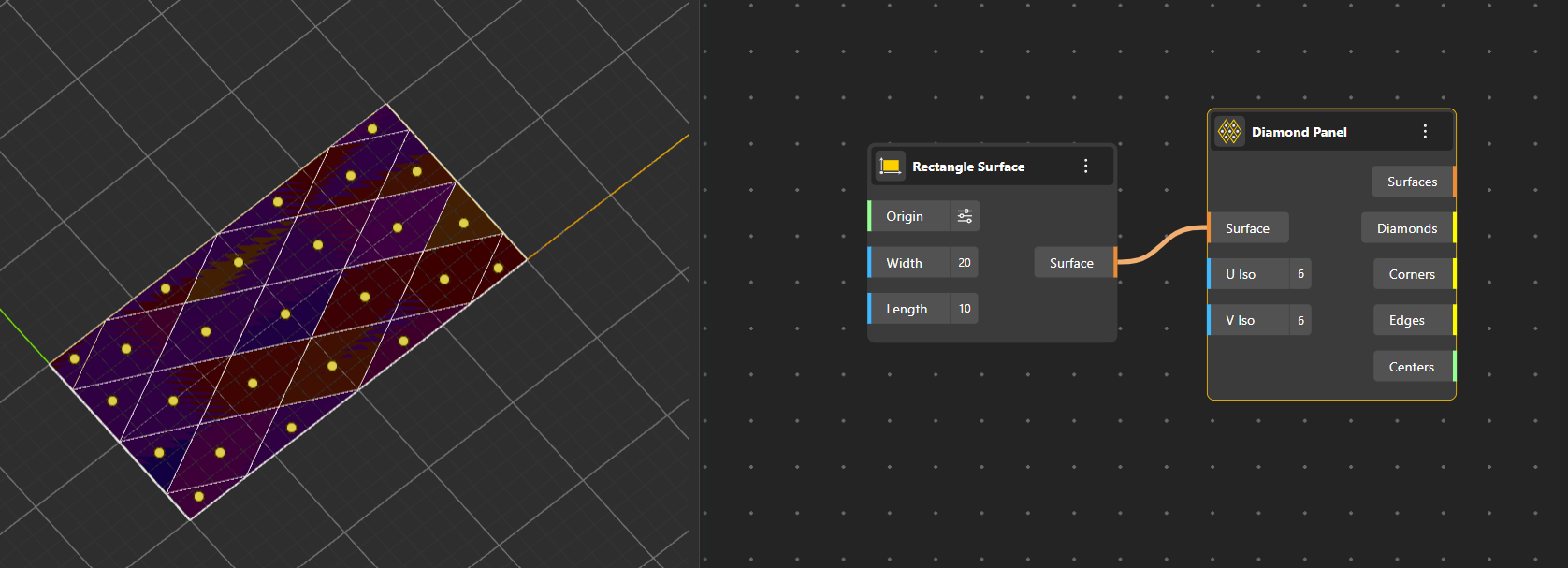
Diamond Panel: Creates a pattern of four-sided diamond-shaped panels. Common in architectural skins, shading systems, and decorative geometric surfaces.
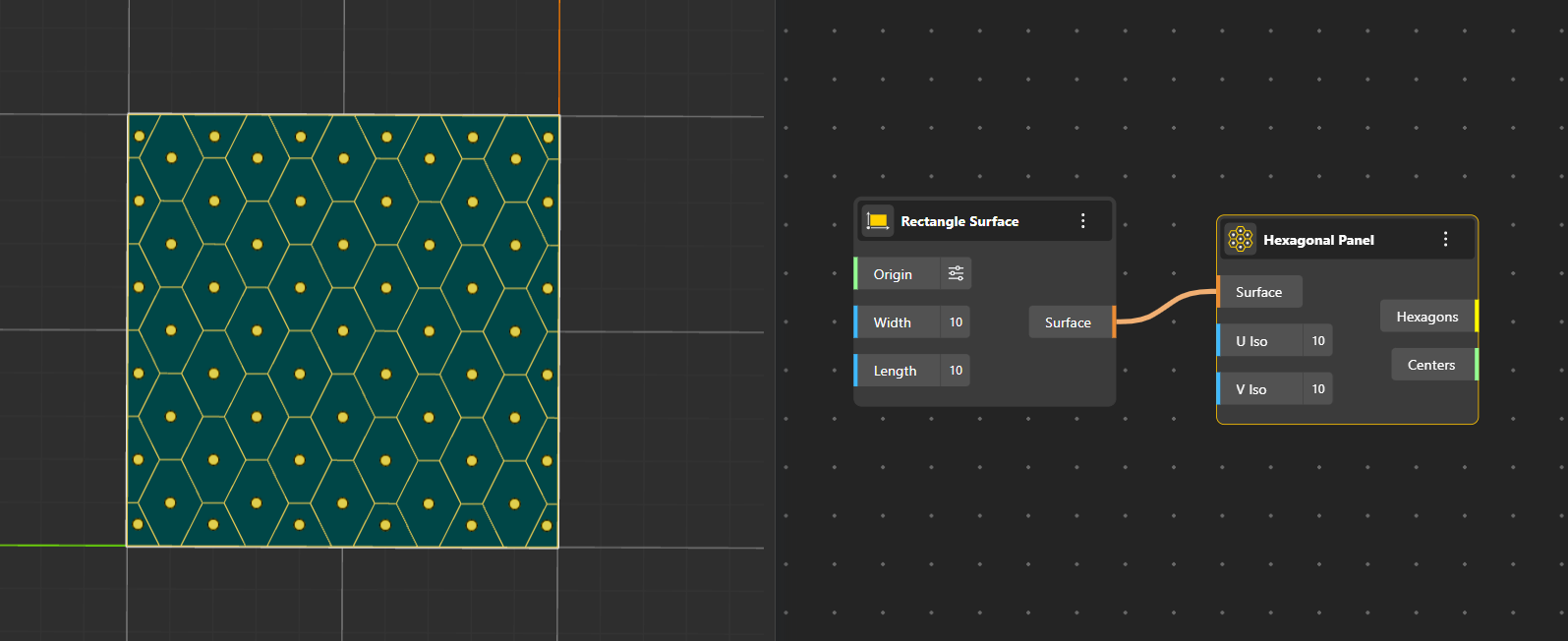
Hexagonal Panel: Generates a six-sided hexagon panel pattern, forming a honeycomb-like structure. Perfect for organic designs, structural grids, and smooth tessellations.
U-Iso and V-Iso in Surface Panels
Think of any surface like a sheet of cloth being divided into a grid.
This grid is made by two directions:
U direction (horizontal flow of the surface)
V direction (vertical flow of the surface)
When you add panels (quad, hex, triangle), the system uses these two directions to slice the surface.
What U-Iso Does
U-Iso = number of cuts made along the U direction.
More U-Iso = more slices horizontally = smaller panel widths.
What V-Iso Does
V-Iso = number of cuts along the V direction.
More V-Iso = more vertical slices = smaller panel heights.