
Service nodes are designed to calculate material usage, cost, or resource requirements based on specific parameters. Unlike other nodes in BeeGraphy, these nodes do not generate geometry outputs. Instead, they work with existing material objects and the input parameters to determine the quantity, cost, or time associated with a service.
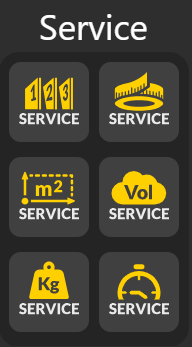
Types of Service Nodes
Count-Based Service: Computes total material or cost based on the number of items. Useful for assemblies, repeated elements, or batch production.
Length-Based Service: Calculates material usage or cost based on the total length of a linear element, such as rods, beams, or pipes.
Area-Based Service: Determines requirements based on surface area of sheets, panels, or flat materials.
Volume-Based Service: Computes material usage, mass, or cost based on the volume of a 3D object.
Weight-Based Service: Calculates resource consumption, cost, or handling requirements using the weight of the material or object.
Time-Based Service: Estimates service duration or operational cost based on time input, useful for processes like fabrication, assembly, or machining.
Key Points
These nodes do not create new geometry.
They operate by taking an existing material object and the given parameter (count, length, area, volume, weight, or time) to compute results.
Ideal for cost estimation, fabrication planning, and project management within a parametric workflow.